India has hundreds of living art traditions, and almost every state has a painting or craft style of its own. Here are 15 widely known art forms of India, where they come from and how to recognise them. For a visual overview, see our Craft Map of India. If you want to shop region by region, our craft map of India guide is the buyer's map by state, with artisans and starting prices. This page looks at the styles themselves and how one differs from another.
| Art form | State | How to recognise it |
|---|---|---|
| Pichwai | Rajasthan | Shrinathji, cows and lotus ponds on cloth |
| Rajasthani miniature | Rajasthan | Small, very fine court and Krishna scenes |
| Phad | Rajasthan | Long scrolls telling the stories of folk deities |
| Madhubani | Bihar | Bright colours, double outlines, no empty space |
| Gond | Madhya Pradesh | Animals and trees filled with dots and dashes |
| Warli | Maharashtra | White stick figures on an earth ground |
| Pattachitra | Odisha | Fine lines, ornate borders, Jagannath themes |
| Kalighat | West Bengal | Bold brush strokes and soft shading |
| Sohrai | Jharkhand | Harvest wall art with animals in earth colours |
| Tanjore | Tamil Nadu | Gold foil, gem inlay, raised gesso work |
| Mysore painting | Karnataka | Gold leaf with soft, delicate colours |
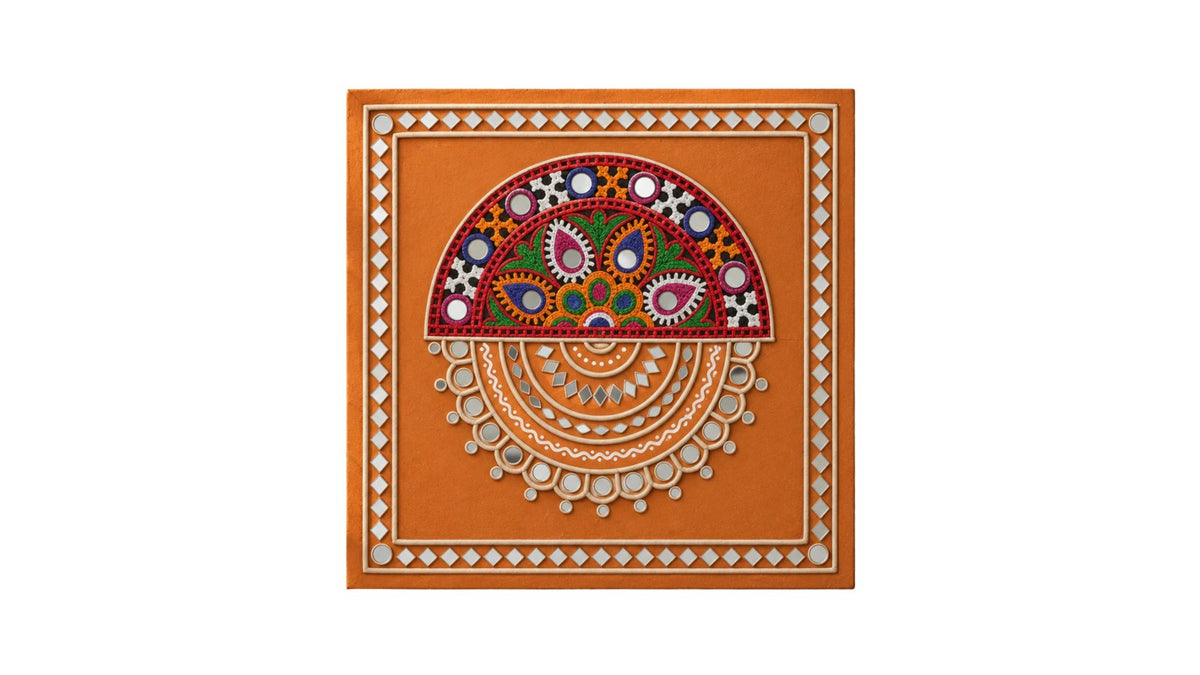
| Lippan | Gujarat | Mud relief with inlaid mirrors |
| Dhokra | Chhattisgarh, MP, Odisha, West Bengal | Lost-wax brass with thread-like texture |
| Tholu Bommalata | Andhra Pradesh | Translucent painted leather puppets |
| Thangka | Himalayan region | Buddhist scroll paintings with mandalas and deities |
How the styles differ: four things to check
You can place almost any traditional Indian artwork by looking at four things in order.
- Surface: Pichwai, Pattachitra, Phad and Thangka are painted on cloth. Madhubani, Gond and Kalighat are usually on paper or canvas today. Warli, Sohrai and Lippan began on the mud walls of village homes. Tanjore and Mysore paintings are built on a wooden board. Tholu Bommalata is painted leather, and Dhokra is cast metal.
- Line: Pattachitra and miniature painting use very fine brush lines. Kalighat uses a few long, sweeping strokes. Madhubani draws each outline twice. Gond fills every shape with dots and dashes. Warli reduces people to circles, triangles and lines.
- Colour: Warli is white on an earth ground. Sohrai stays with earth colours. Madhubani and Gond are bright. Tanjore adds gold foil. Lippan is often plain white, with mirrors doing the work of colour.
- Subject: Pichwai centres on Krishna as Shrinathji, Pattachitra on Lord Jagannath and Thangka on Buddhist deities. Warli and Sohrai show village life, harvest and animals. Gond turns forest stories into trees, birds and deer.


Styles that are easy to mix up
- Pattachitra and Kalighat: both come from eastern India and both paint gods and epics. Pattachitra from Odisha packs the cloth with detail inside ornate borders. Kalighat from West Bengal uses larger, shaded figures on an open ground.
- Tanjore and Mysore: both come from South India and often show deities. Mysore paintings use finer lines, lighter gesso work and softer colours, while Tanjore paintings use heavier raised gesso and more gold.
- Madhubani and Gond: both are bright and full of nature. Madhubani has double outlines, leaves no empty space and often shows gods, weddings and fish. Gond usually sets one tree or animal on a plain ground and fills it with patterned dots and dashes.
- Warli and Sohrai: both began as wall art. Warli shows small white figures dancing, farming and hunting. Sohrai paints large animals and plants in earth colours for the harvest festival.

Painting, sculpture and craft: three families
- Painting traditions: Pichwai, Madhubani, Gond, Warli, Pattachitra, Kalighat, Sohrai, Tanjore, Mysore and Thangka.
- Metal and sculpture: Dhokra and Bharewa lost-wax casting, wood carving and terracotta.
- Relief and performance crafts: Lippan mud-mirror work and Tholu Bommalata shadow puppets.

GI-tagged art forms
Many of these traditions carry a Geographical Indication (GI) tag, which protects the name for work made in the region of origin. Examples include Madhubani painting, Odisha Pattachitra, Warli painting, Gond painting, Sohrai Khovar painting, Tanjore painting, Mysore painting, Bastar Dhokra and Bengal Dokra.
Why these art forms matter
Each style is passed down within families and communities, often over many generations. Buying an original directly supports the artist and keeps the skill alive. Every piece at Treasure of India is handmade by a named artisan and comes with a certificate of authenticity.
What original Indian art costs
Price follows size, detail and the hours of handwork, so the styles sit in different ranges. At Treasure of India, Lippan panels are currently ₹1,599 each. Madhubani paintings range from ₹1,599 to ₹17,999, Kalighat starts at ₹1,990 and Gond at ₹2,599. Warli runs from ₹3,599 to ₹19,990 and Sohrai from ₹7,999 to ₹30,999. Dhokra ranges from ₹1,190 for small figurines to ₹49,990 for large sculptures. Thangka paintings range from ₹14,999 to ₹65,000, and large Pattachitra cloth paintings from ₹54,999 to ₹1,09,000. The site shows these ₹ prices in your own currency.
Shipping worldwide
We ship every art form on this page worldwide from our gallery in Palam Vihar, Gurugram, India. Orders usually arrive in 2 to 3 weeks, and made-to-order pieces need 2 to 4 weeks of crafting first. International shipping is a flat ₹4,000 per order, so several pieces can travel for one fee. Within India, delivery is free on orders of ₹2,999 and above and ₹199 below that. Customs duties and import taxes are paid by the buyer; see international shipping, customs and duties. If you want to see a piece before you order, use the "Request a video call" button on its product page and we will show it to you live on WhatsApp.
See them in person

Our gallery in Palam Vihar, Gurugram shows many of these traditions under one roof. Visits are by appointment, Monday to Sunday, 11 AM to 8 PM. Book a visit or meet the artisans.
Explore more Indian art
Browse all Indian paintings or handmade artifacts. To go deeper into one style, read our guides to Madhubani, Warli, Gond, Pattachitra, Kalighat and Dhokra. For display ideas, see how to style handcrafted Indian art in a modern home.
FAQs
How many art forms are there in India?
There is no fixed count; India has hundreds of folk, tribal and classical art traditions.
How old are the living art forms of India?
Among living crafts, Dhokra lost-wax casting traces back about 4,000 years.
Which Indian art forms have a GI tag?
Madhubani, Pattachitra, Warli, Gond, Sohrai Khovar, Tanjore, Mysore painting and Dhokra are among them.
Which Indian art form suits home decor?
Pichwai and Pattachitra suit statement walls; Madhubani, Gond and Warli suit bedrooms and studies; Dhokra adds sculpture to consoles and shelves.
Can I buy these art forms from outside India?
Yes. We ship worldwide for a flat ₹4,000 per order, and delivery usually takes 2 to 3 weeks. Each artwork comes with a signed certificate of authenticity naming the artisan.